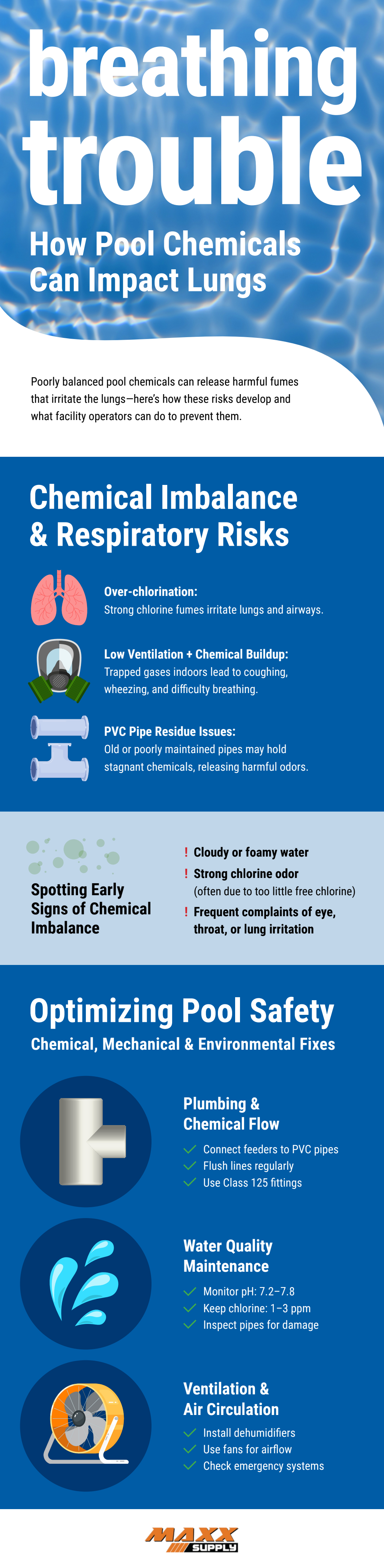



Vacation pools are often a highlight of family travel, but the chemicals that keep them clean can sometimes create invisible air quality issues. Chlorine and other sanitizers protect swimmers from harmful bacteria, yet improper balance or poor ventilation can cause breathing discomfort, especially in children.
Why Pool Air Can Irritate Lungs
When chlorine reacts with sweat, sunscreen, and body oils, it creates chloramines. These gases rise from the water’s surface and can irritate eyes, noses, and airways. Indoor pools, especially in hotels or resorts, are more likely to trap these fumes if ventilation is weak. Families spending long hours swimming or sitting near the water may experience coughing, throat irritation, or a burning sensation in the chest. Children are particularly sensitive because their lungs are still developing and they breathe closer to the water’s surface.
How to Stay Safe While Traveling
Before booking accommodations, check if the pool area feels stuffy or carries a strong chemical odor. A clean, well-maintained pool should smell lightly of chlorine, not overwhelmingly strong. Taking breaks between swims and encouraging kids to shower before entering the water help limit chemical reactions that lead to chloramines. For resort operators, maintaining balanced water chemistry and using quality fittings like a PVC Schedule 40 coupling supports safe, leak-free plumbing that helps prevent chemical buildup.
Healthy pool environments depend on care and attention. With small precautions, families can enjoy every swim without worrying about what’s floating in the air above the water. To learn more, check out the accompanying infographic below.